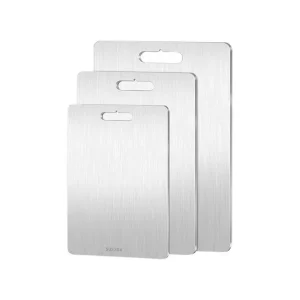
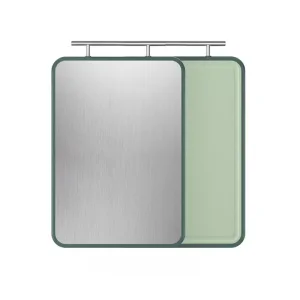
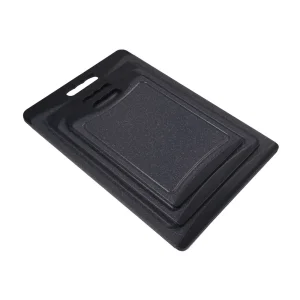
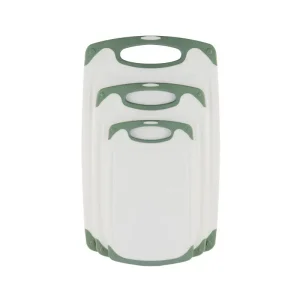
Premium, sanitary prep surfaces configured for commercial kitchens and high-end retail across the Toronto market.
In the modern food services sector of the Greater Toronto Area (GTA), operational efficiency and strict compliance with municipal public health mandates dictate procurement choices. The city of Toronto operates under some of the most rigorous public health standards in North America, primarily governed by the Toronto Public Health DineSafe program. Traditional cutting surfaces—namely wood and standard high-density polyethylene (HDPE)—are increasingly scrutinized due to their propensity for micro-scoring, groove retention, and subsequent bacterial colonization by pathogens such as Escherichia coli, Listeria monocytogenes, and Salmonella enterica.
To address this hazard, commercial kitchens, food processing plants, and premium residential developers are turning to SUS304 food-grade stainless steel cutting boards. Stainless steel provides an impervious, non-porous surface that eliminates cross-contamination risks, simplifies sanitation protocols, and withstands the abrasive cleaning agents required in professional settings. This whitepaper analyzes the mechanical, structural, and chemical benefits of adopting stainless steel prep surfaces, explores the local commercial applications within Ontario, and outlines the robust factory-to-market supply chain dynamics of JOYWAVE.
The performance of a cutting surface is fundamentally determined by its mechanical hardness, surface roughness ($R_a$), and chemical resistance. When evaluating materials for high-volume culinary prep, it is helpful to compare food-grade stainless steel with traditional alternatives:
The Greater Toronto Area represents Canada's most dense concentration of food service operators, centralized kitchens, and food processing facilities. The local market demand for stainless steel prep gear falls into three main areas:
In downtown Toronto, Mississauga, and Markham, high-volume restaurants face regular health inspections. Health inspectors frequently cite worn, deeply grooved cutting boards as safety hazards. Transitioning to SUS304 cutting boards in raw meat prep stations provides commercial kitchens with a reliable way to avoid public health citations. These non-porous surfaces are easy to clean, sanitize, and verify during inspection sweeps.
For local processors handling poultry, seafood, and prepared meals near Toronto Pearson Airport's logistics hub, hygiene and durability are critical. Stainless steel boards do not absorb moisture or odors, which is vital in preventing cross-contamination between different batches of seafood and poultry. This makes them highly suitable for cleanrooms and automated sorting facilities.
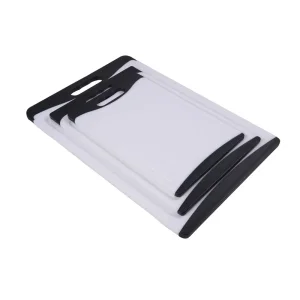
Toronto's luxury residential market demands sleek, space-saving kitchen designs. Hybrid dual-sided boards—featuring a polished steel finish on one side and a textured polymer on the other—fit perfectly into compact, modern kitchens. They provide a professional-grade prep space that integrates cleanly into contemporary home designs.
Founded in 2013 in Ningbo, China, JOYWAVE has spent over a decade developing its capabilities as a premier OEM/ODM manufacturer. We operate a highly integrated, ISO 9001-certified factory capable of managing raw materials, high-precision injection molding, co-molding, surface polishing, and automated packaging. Our partnerships with major global brands like Walmart, Costco, Macy's, and Williams Sonoma demonstrate our commitment to quality, capacity, and logistical reliability.
For buyers in the Toronto market, shipping logistics are a major consideration. JOYWAVE leverages Ningbo's deepwater port access to coordinate efficient ocean freight routes to the Port of Montreal or the Port of Halifax. From there, intermodal rail transport delivers cargo directly to GTA distribution centers. This established shipping network helps protect our clients from supply chain disruptions, ensuring reliable transit times and consistent inventory flow.
Additionally, our in-house engineering team works directly with clients to convert 2D design concepts into functional prototypes. This capability allows us to offer custom branding, laser-etched alignment markings, and custom dimensions tailored to specific kitchen prep stations.
An inside look at our automated production line, designed to ensure flat surfaces, clean bonding, and long-term durability.
We source food-grade SUS304/SUS316 stainless steel sheets, which are laser-cut and passivated to enhance corrosion resistance and prepare the surface for bonding.
High-density virgin polypropylene and eco-friendly fillers are blended with heat stabilizers and food-safe colorants to ensure uniform batch colors.
Our heavy-tonnage injection molding machines shape the structural core of the board, ensuring precise dimensions and flat surfaces.
Using secondary over-molding, we bond non-slip thermoplastic elastomer (TPE) borders to the edges, creating a secure grip on damp kitchen countertops.
Robotic pick-and-place arms transfer molded parts to specialized cooling jigs, keeping the boards flat during the thermal crystallization process.
Each unit undergoes automated optical inspection to detect surface defects. Custom client logos and measurement guides are then laser-etched onto the steel face.
Finished boards go through multi-stage ultrasonic wash baths to remove manufacturing residues, oils, and particulate matter before packaging.
Clean boards are individually shrink-wrapped, labeled with regulatory marks, and packed into heavy-duty cartons built to withstand trans-oceanic shipping.
The food preparation hardware industry is shifting toward materials and designs that support automated cleaning processes and circular-economy packaging regulations. Over the next five years, JOYWAVE's product development focuses on three key areas:
Answers to common B2B procurement queries regarding regulatory compliance, manufacturing capacity, and shipping options.
Browse our complete range of specialized cutting boards and serving trays, available for bulk purchase and OEM customization.
 Joywave